Not every operator starts with a Wattman train. Some discover it after learning what the alternative looks like in daily commercial use.
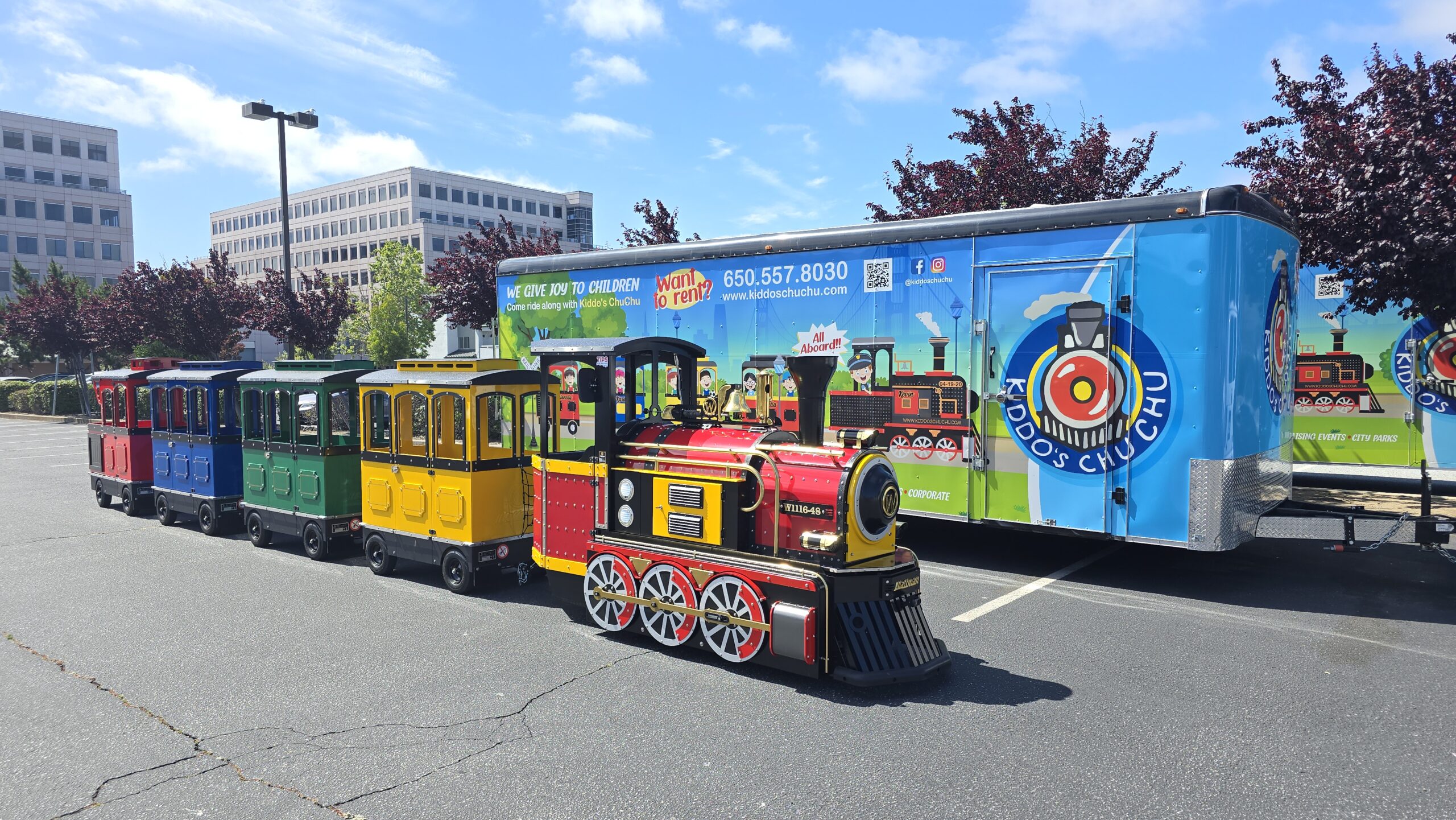
Cesar Aguilar of Kiddos ChuChu in the San Francisco Bay Area is one of those operators. He started with a different brand. What he experienced was enough to make him switch. What happened after that switch tells you everything about the difference between a trackless train that is built for operators and one that is built for a brochure.
The Switch
Cesar's first trackless train was not a Wattman. The details of what went wrong with the other brand are his story to tell, but the outcome speaks clearly: he moved to Wattman and never looked back.
The reason was not aesthetics. It was reliability. When you operate 4 to 5 days per week across rotating venues in the Bay Area, running 35 or more rides per day during peak events, the train either holds up or it does not. The Wattman held up.
"Wattman offered a more professional setup and better long-term value that you won't be able to find in any other trackless train manufacturer."
Cesar Aguilar, Kiddos ChuChu
14-Month ROI
Cesar recovered his full investment in 14 months. That number deserves attention, because it is not the result of aggressive pricing or a favorable deal. It is the result of a train that runs reliably, attracts repeat bookings, and generates consistent revenue because it does not break down in the middle of a 200-guest birthday party.
He now operates two Wattman trains, a Mini Express and a Maxi Express, serving private events, corporate functions, school celebrations, and community festivals across the Bay Area. The business grew through word of mouth. People saw the train, asked who made it, and booked their own event.
What Build Quality Actually Means in Practice
Build quality is easy to claim and hard to prove. For operators like Cesar, it shows up in specific ways: the train starts every time, the steering responds precisely in tight spaces, the battery holds its charge through a full operating day, and the cosmetics still look premium after hundreds of events.
Joe Rios of Li'l Grande Trains in Irving, Texas confirms the same thing with an even longer track record. His oldest Wattman unit has been in service since 2010. Over fifteen years of commercial use, and the train still looks and performs like new.
That kind of durability is not accidental. It is the result of independent certification to EN 13814:2019, harmonized with ASTM F2291 and F1193 for US commercial operation. Every Wattman train is independently tested, not self-declared.
The AV Program as the Ownership Framework
When Cesar purchased his Wattman trains, the Assured Value Program did not yet exist. Today, every new Wattman ordered in the US comes with the option to enroll.
48 months of full-train warranty coverage. A guaranteed trade-in value. Financing access. One program, built exclusively for US operators.
For operators like Cesar, who already know what Wattman quality looks like in daily use, the AV Program is the logical next step: manufacturer-backed certainty that the train will hold its value and that coverage will not expire before the asset does.
What the Switch Tells You
Switching brands is not a decision operators make lightly. When someone who has experienced the alternative chooses Wattman and then scales their business on that choice, it says more than any specification sheet.
Curious what operators across the US are building with Wattman trains? Their stories are worth reading.