
Total cost of ownership is a term that gets used freely in capital equipment discussions. But for trackless train operators, it often stops at the purchase allocation and maybe the first year of maintenance.
The real cost of ownership extends across the full lifecycle of the asset. And no operator in the United States illustrates that lifecycle better than Joe Rios of Li'l Grande Trains in Irving, Texas, whose oldest Wattman unit has been in commercial service since 2010.
What TCO Actually Includes
Total cost of ownership for a trackless train includes the initial investment, financing charges, annual maintenance, parts replacement, insurance, storage, transport, and the eventual disposal or trade-in of the asset.
Most buyers evaluate the first two: what does it cost, and how do I pay for it. The remaining elements are where the real variance between products shows up.
A lower-priced train with higher maintenance requirements, more frequent parts failures, and lower residual value can cost significantly more over a 10-year period than a premium product with lower lifetime maintenance and a guaranteed trade-in.
The 2010 Unit as a TCO Case Study
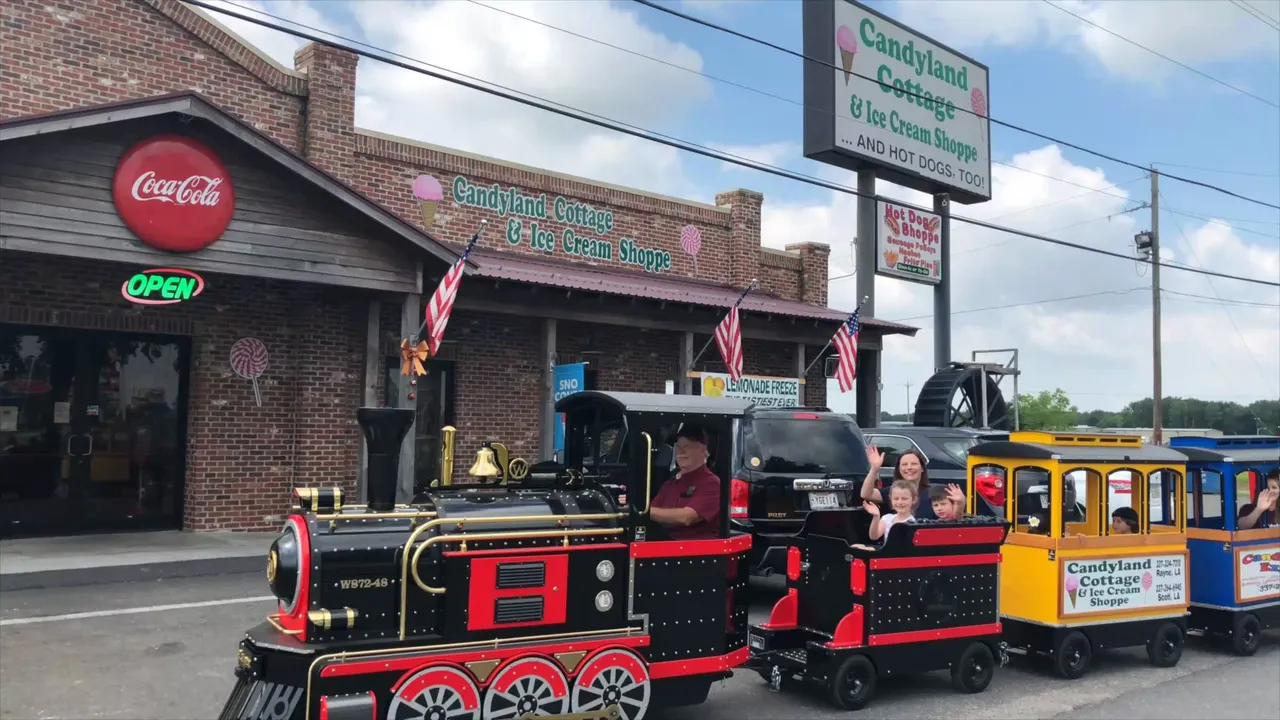
Joe's 2010 Wattman Mini Express has been in continuous commercial service for over fifteen years. It has operated at malls, festivals, schools, private parties, and indoor stage events. It loads and unloads from a single trailer in 20 to 30 minutes. At peak events, it runs 10-minute ride cycles.
After more than fifteen years, the unit still looks and performs like new. That is not a marketing claim. It is the documented reality of a train that was engineered for a 10-year lifecycle and has exceeded it.
The TCO effect: The annual cost of ownership decreases every year the train remains in service. The initial investment is amortized over a longer period. The maintenance requirements remain predictable. And the residual value, when the operator eventually trades in, is supported by the product's demonstrated durability.
How the AV Program Reduces TCO From Day One
The Assured Value Program addresses TCO at three points:
A TCO Data Point, Not a Testimonial
A Wattman train from 2010 is still running daily in Irving, Texas. That is not a testimonial. It is a TCO data point.
If you are evaluating the long-term economics of a trackless train investment, the question is not what it will cost this year. It is what it will cost over the full life of the asset. The answer, based on 15 years of real-world evidence, favors the product that was built to last.